

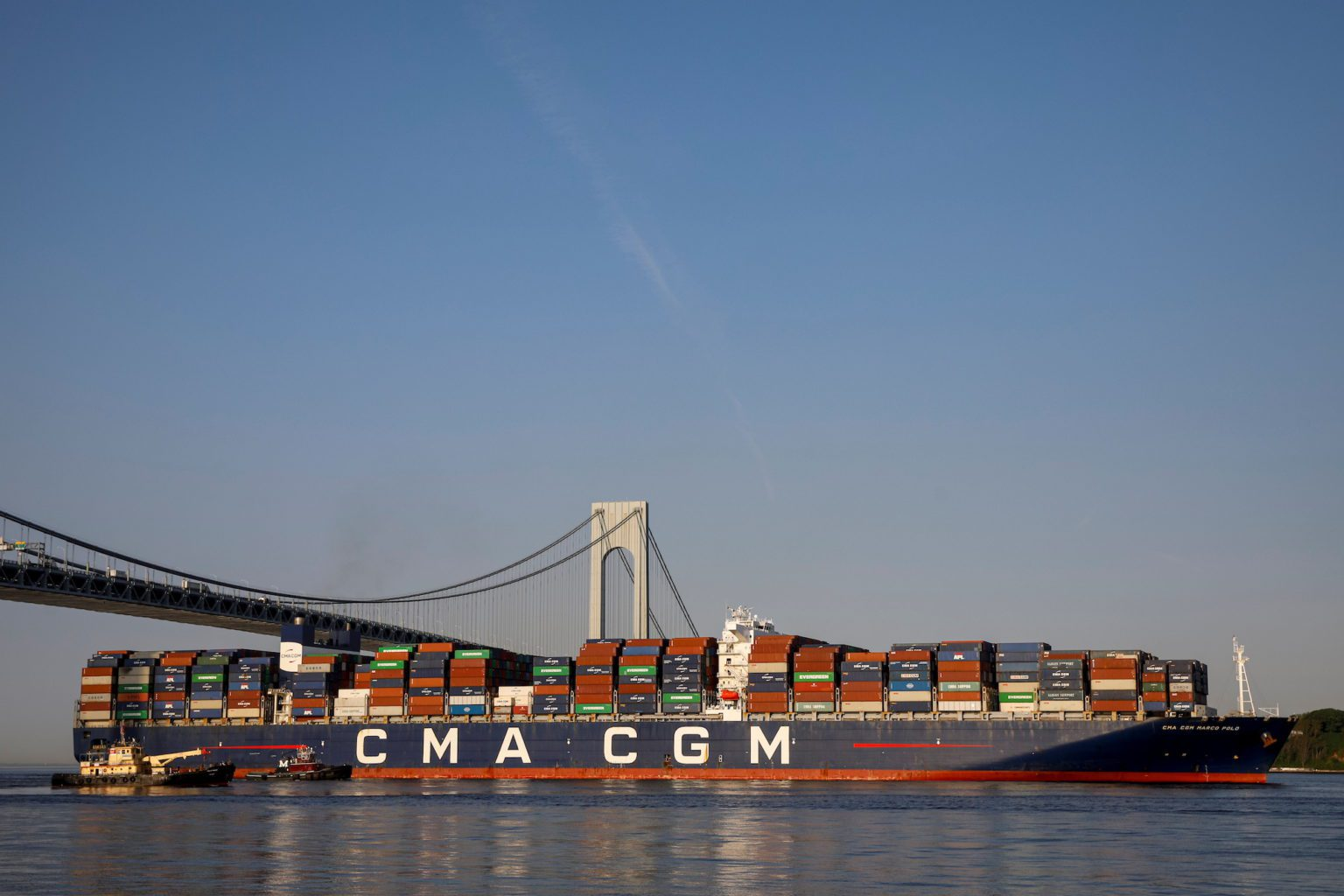
photo: A container ship entering New York Harbour. What effect could Trump’s charges on Chinese ships have on such internationally integrated industries as cosmetics? One more uncertainty in uncertain times!
April 2nd Looking to be a Big Day & What You Need To Know!
At a recent meeting of our industry’s international working group on tariffs and the trade war, a summary of what tariffs and counter-tariffs are now in place, proposed, or expected to be announced shortly was shared among members and it paints a chaotic picture for industry including our own.
A summary of what is, and what may be coming, includes:
Original U.S. Attack on Canada & Mexico – The one month’s exemption to Trump’s previously announced tariffs of 25% on all imports from Canada & Mexico (but only 10% on Canadian energy & potash which the U.S. needs) is set to expire on April 2nd. Canadian retaliatory tariffs on some $30 B of US exports to Canada – including cosmetics are already in place with a further extension to a further $125 B of US exports set to go in effect if Trump continues with his plan.
U.S. Steel & Aluminum Tariffs – A 25% tariff on all imported steel and aluminum into the U.S. has been in place since March 13th. The European Union as announced retaliatory tariffs on U.S. exports of US$8.7 B worth of goods as of April 1st, including 25% on U.S. manufactured cosmetics. A further US$19.7 B is expected to be added as of April 13th. Canada will not remove its retaliatory tariffs unless these steel and aluminum tariffs are also lifted by the U.S.
U.S. Reciprocal Tariffs – Trump has ordered a review of ALL countries and sectors by the U.S. Trade Representative ((USTR) to assess what tariffs and other “unfair” charges are made against U.S. exports. Trump has included the application of value added taxes (like the Canadian Goods & Services Tax) even though they are applied equally to both domestic and imported products. The USTR report is due April 1st. The U.S. Personal Care Products Council (PCPC) is concerned that retaliatory measures by affected countries will include cosmetics and so threaten U.S. cosmetic exports.
Canadian Agriculture Hit with 100% Tariffs on Canola – Canadian farmers have been hit with a recently announced tariff of 100% on canola by China, a major export crop. The Chinese announcement was in retaliation for the recent placement of a significant tariff on Chinese made electric vehicles as part of a North American strategy to support North American made EV’s. Trump’s tariff war, and his direct attack on the highly integrated North American auto manufacturing sector, has led to some calls for opening the Canadian market to Chinese EV’s if Trump persists in undermining this sector. If anything, this action demonstrates how in a trade war no sector is really “off the table” and that even unrelated products can suddenly become related in the crossfire of tariffs and counter measures.
Digital Services Investigation – Trump has ordered the USTR to also review the various taxes imposed on U.S. based digital services companies by Canada, France, Italy, Turkey, and the U.K. Tariff or other measures imposed by the U.S. may result in further countermeasures.
Surcharges on Chinese Ships Landing at U.S. Ports – The USTR has also been ordered to investigate Chinese shipping with various penalties under consideration for ship arriving at U.S. ports (both to deliver and load cargoes). These proposed penalties include:
- Chinese Carriers (ships built anywhere) – US$1 M
- Any Carrier (ships built in China) – US$1.5 M
- Any Carrier (Chinese built ships on order) – US$1 M
- Increased scrutiny on potential diversion through Canadian or Mexican ports
The U.S. shipbuilding industry does not have the capacity to build the size of ships required to replace Chinese built shipping, including the absence of any shipbuilding yards large enough to construct the ships now built by China. It is reported by Reuters that this proposal is already “choking coal, and agricultural exports” from the U.S. as vessel owners are refusing to provide offers for future U.S. shipments. Xcoal Energy & Resources CEO Ernie Thatcher is reported to have indicated in a letter to U.S. Commerce Secretary Howard Lutnick that “implementing these fees would cease U.S. coal exports within 60 days, putting US$130 B worth of shipments at risk”. Thatcher added that this could add up to 35% to the cost of delivered coal making it uncompetitive.